Domain Name vs Web Hosting: You’re ready to launch your website and suddenly face terms like “domain name” and “web hosting” everywhere.
They seem related, often sold together, yet everyone insists they’re completely different things. This confusion stops thousands of aspiring website owners in their tracks every single day, creating unnecessary delays and frustration.
The truth is simpler than most explanations make it sound – domains and hosting work together like a street address and a physical building, each serving distinct but complementary purposes.
Understanding the difference between domain names and web hosting empowers you to make smart purchasing decisions, avoid overpaying for bundled services you don’t need, and troubleshoot problems when they arise.
Let’s cut through the technical jargon and explain exactly what each component does and why you need both to create a successful website.
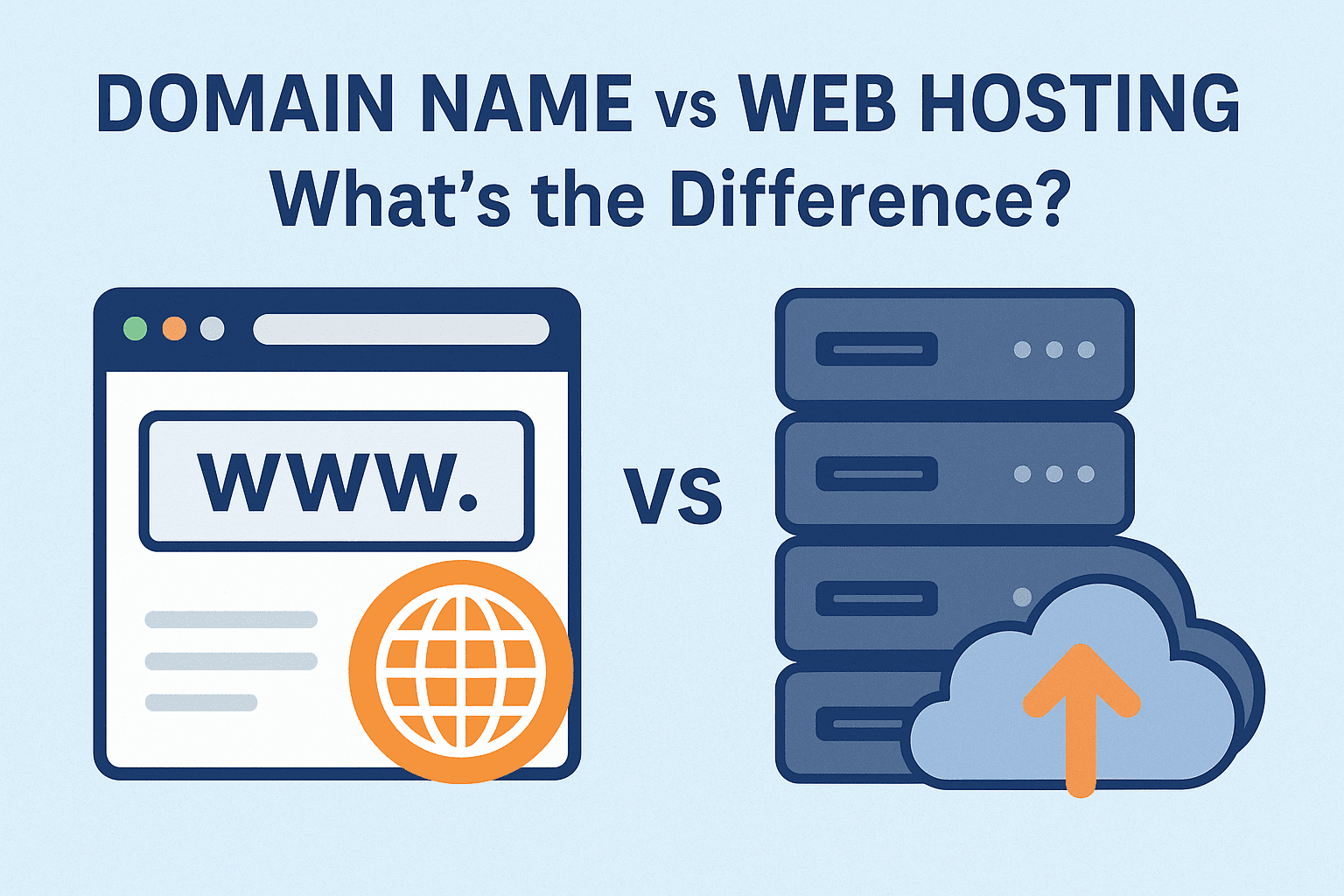
The Simple Explanation
A domain name is your website’s address that people type into their browser, while web hosting is the actual space where your website files live.
Think of it like a physical business. Your domain name is the street address printed on business cards and advertisements. Web hosting is the actual building where your business operates, stores inventory, and serves customers.
Without a domain name, people have no way to find your website easily. Without web hosting, your website has no place to exist on the internet. You absolutely need both components working together for a functional website.
Understanding what a domain name is provides the foundation for grasping how it differs from hosting. The domain serves as a memorable identifier while hosting provides the technical infrastructure.
What Is a Domain Name?
A domain name is the human-readable address that identifies your website on the internet.
Instead of memorizing complex IP addresses like 192.168.1.1, you simply type easy-to-remember names like Google.com or Facebook.com. Domain names translate these numerical addresses into words that make sense to humans. This translation happens automatically through the Domain Name System.
Every domain name must be unique globally. No two websites can share the exact same domain name. This uniqueness makes domains valuable digital assets that require registration and renewal to maintain ownership.
Domain Name Components
Domain names consist of multiple parts separated by dots, each serving a specific function.
The main visible portion is your chosen name – the second-level domain. This represents your brand, business, or website concept. After the dot comes the extension or top-level domain like .com, .org, or .net.
Learning about what the 5 top level domains are helps you understand how extensions categorize and organize websites across the internet. Different extensions signal different purposes and origins.
How Domain Names Work Technically
When someone types your domain name, computers must translate it into an IP address to locate your website.
This resolution process happens through DNS servers that maintain massive databases linking domain names to their corresponding numerical addresses. Understanding how domain names work reveals the technical journey from typed address to displayed website.
The DNS system queries multiple servers in a hierarchical structure. This distributed approach ensures reliability and speed when resolving billions of domain lookups daily. The entire process completes in milliseconds, making it feel instantaneous to users.
What Is Web Hosting?
Web hosting is the service that stores your website files on servers connected to the internet 24/7.
These servers are specialized computers designed to keep websites accessible continuously. They store all your HTML files, images, videos, databases, and code that make up your website. When visitors request your site, the hosting server sends these files to their browsers.
Without hosting, you might have website files on your personal computer, but nobody else could access them online. Hosting providers maintain the infrastructure, electricity, cooling, security, and internet connectivity that keeps your site available worldwide.
Types of Web Hosting
Different hosting types serve different needs and budgets, from basic to enterprise-level solutions.
Shared hosting places your website on a server alongside hundreds of other sites, splitting resources and costs. This affordable option works perfectly for small websites with modest traffic. You share server space like renting an apartment in a building with many units.
Virtual Private Server (VPS) hosting provides dedicated resources within a shared server environment. You get guaranteed processing power, memory, and storage that other sites can’t consume. This middle-ground option balances performance with affordability.
Dedicated hosting gives you an entire server exclusively for your website. All resources belong to you alone, providing maximum performance, control, and customization. Large sites with heavy traffic typically require dedicated hosting despite higher costs.
Cloud hosting distributes your website across multiple connected servers. If one server fails, others compensate automatically. This modern approach provides excellent reliability and scalability for growing websites.
What Hosting Includes
Web hosting packages typically bundle multiple services beyond just storage space.
Most hosting plans include a certain amount of disk space for your files, bandwidth for visitor traffic, and email accounts using your domain. Many providers also include one-click installation tools for popular platforms like WordPress.
Security features like SSL certificates, malware scanning, and automatic backups protect your website and visitors. Control panels provide user-friendly interfaces for managing files, databases, email, and domain settings without needing technical expertise.
Key Differences Between Domains and Hosting
While domains and hosting work together, they serve completely different functions with distinct characteristics.
Purpose and Function
Domains provide the address; hosting provides the storage and delivery system.
Your domain name exists solely to help people find your website easily. It’s a navigation tool that translates into technical addresses. Hosting actually contains and serves your website content to visitors who arrive via that domain.
You can own a domain without hosting, though it won’t display a website. Some people register domains for future use or to prevent competitors from claiming them. Conversely, you can have hosting without a custom domain by using temporary addresses provided by hosting companies.
Cost Structure
Domain registration and hosting renewal follow different pricing models and timelines.
Domains typically cost $10-20 annually for standard extensions. You register them for periods from one to ten years. The cost remains relatively stable regardless of how much traffic your site receives or how many files you store.
Hosting prices vary dramatically based on server resources, performance, and included features. Basic shared hosting starts around $3-10 monthly, while dedicated servers cost hundreds of dollars monthly. Your hosting needs and costs often grow as your website expands.
Management and Control
You manage domains and hosting through different interfaces, often with different companies.
Domain management happens through your registrar’s control panel. Here you configure DNS settings, update contact information, set up forwarding, and renew registration. These settings rarely need changing once properly configured.
Hosting management occurs through your hosting provider’s control panel like cPanel or custom dashboards. You upload files, install applications, create email accounts, monitor traffic, and adjust technical settings here. Regular hosting management is necessary for maintaining your website.
Provider Flexibility
Domains and hosting can be purchased from the same company or different providers based on your preferences.
Many people appreciate the simplicity of bundled services where one company handles both domain and hosting. This streamlines setup, billing, and support. However, bundling isn’t mandatory or always advantageous.
You can register domains with specialized registrars while hosting elsewhere. This separation allows you to choose the best provider for each service rather than compromising. Transferring hosting between companies is also easier when your domain registration lives separately.
Why You Need Both
Neither component functions effectively without the other for a publicly accessible website.
The Domain Without Hosting Scenario
A registered domain without hosting is like owning a street address with no building at that location.
People can find the address, but nothing exists there to visit. Your domain might display generic parking pages, error messages, or “coming soon” notices. These placeholders indicate ownership but don’t serve useful content.
Some legitimate reasons exist for registering domains without immediate hosting. You might be securing a name for future use, protecting your brand from competitors, or gradually building your domain portfolio. Just understand that visitors can’t access actual website content without hosting.
The Hosting Without Domain Scenario
Hosting without a custom domain means using temporary addresses that look unprofessional and are hard to remember.
Most hosting providers assign default addresses like “yoursite.hostingcompany.com” to new accounts. While functional, these lengthy subdomains lack the credibility and memorability of custom domains. They signal an amateur operation rather than an established business.
You technically can operate on these default addresses, but doing so hurts your brand and marketing effectiveness. Custom domains cost so little that using temporary addresses makes no practical sense for serious websites.
Purchasing Domains and Hosting
Several approaches exist for acquiring these essential website components, each with distinct advantages.
Bundled Services from One Provider
Many hosting companies include free domain registration with hosting plans, simplifying the entire process.
For example, you can get a free domain with Hostinger when purchasing eligible hosting packages. This bundling eliminates domain registration as a separate expense for the first year. Everything gets configured automatically during hosting setup.
Bundled services appeal to beginners who want simplicity and one-stop management. You deal with a single company for billing, support, and technical issues. The automatic connection between domain and hosting removes configuration complexity.
However, bundling does create some limitations. You’re locked into that provider’s domain management interface and renewal pricing. Transferring your domain to another registrar later involves extra steps and potential downtime.
Separate Providers for Maximum Flexibility
Purchasing your domain from a specialized registrar while hosting elsewhere provides greater control and flexibility.
Domain registrars like Namecheap and GoDaddy focus specifically on domain services, often offering better pricing and features than hosting companies dabbling in domain registration. Specialized registrars typically provide superior domain management tools and competitive renewal rates.
Hosting companies that specialize exclusively in hosting generally provide better performance and support than registrars offering hosting as a side business. Choosing best-in-class providers for each service optimizes your website foundation.
The tradeoff is slightly more complex initial setup. You’ll need to manually configure DNS settings to connect your separately registered domain to your hosting account. This process involves copying nameserver addresses from your host and entering them in your domain registrar’s control panel.
Common Misconceptions
Several persistent myths about domains and hosting create confusion for newcomers.
“Buying Hosting Gives Me a Domain”
Many people assume purchasing hosting automatically includes a domain name they own permanently.
While hosting companies often bundle free domain registration with plans, you don’t automatically get to keep that domain if you switch hosting providers. The domain registration is a separate service that requires renewal. If you stop paying your hosting bill, you might also lose domain renewal unless you actively maintain it.
Read the terms carefully to understand whether bundled domains require continued hosting to keep the registration active. Some providers truly give you the domain registration independently, while others tie it to maintaining their hosting service.
“Domains and Hosting Must Come from the Same Company”
There’s no technical requirement to purchase domains and hosting from the same provider.
The internet’s infrastructure allows any domain to point to any hosting server regardless of company relationships. DNS configuration bridges different providers seamlessly. Millions of websites successfully operate with domains and hosting from different companies.
Choose providers based on which offers the best service for each component rather than feeling forced to bundle everything together. Flexibility increases as you gain experience and understand your specific needs.
“More Expensive Hosting Means Better Domain”
Hosting costs have no relationship to domain quality since they’re completely separate services.
A $3 monthly hosting plan works identically with a $10 domain as a $300 monthly dedicated server does. The domain simply points to whatever hosting you choose. Premium hosting affects website performance, not domain functionality.
Similarly, expensive premium domains don’t require expensive hosting. A valuable $10,000 domain works perfectly with basic shared hosting if your traffic doesn’t demand more resources. Match hosting power to your actual needs regardless of domain costs.
Finding the Right Domain Name
Choosing your domain requires careful consideration since it becomes your permanent web address.
Start by understanding characteristics of good domain names that create memorable, professional identities. Short, simple names that are easy to spell and pronounce work best across all marketing channels.
Avoid common domain name mistakes that create problems after registration. Issues like trademark infringement, confusing spellings, or awkward combinations cause expensive headaches down the road. Prevention through proper research saves money and stress.
Using Domain Search Tools
Performing a thorough domain name search reveals which names are available across different extensions.
Check not only .com but also .net, .org, and relevant modern extensions. Your perfect name might be available with a different extension when .com is taken. Modern extensions often provide better availability for memorable short names.
If struggling to find available options, domain name generator tools suggest creative combinations you might not think of yourself. These tools check availability instantly while brainstorming, streamlining your search process significantly.
Trademark Considerations
Learning how to avoid domain trademark infringement protects you from legal problems.
Just because a domain is available to register doesn’t mean it’s legally safe to use. Trademark rights exist independently of domain availability. Conduct proper trademark searches before committing to any name to avoid forced surrender of your domain later.
Choosing Web Hosting
Select hosting based on your website’s specific needs, expected traffic, and technical requirements.
Evaluating Your Needs
Consider what type of website you’re building and who will visit it.
A personal blog or small business site works perfectly on shared hosting. E-commerce stores handling transactions need more robust security and performance. Large community sites with thousands of daily visitors require substantial resources that shared hosting can’t provide.
Think about technical expertise too. Managed hosting services handle technical maintenance and updates for you. Unmanaged hosting costs less but requires you to handle server administration yourself. Choose plans matching your comfort level with technology.
Key Features to Compare
Look beyond price when evaluating hosting options to ensure adequate service quality.
Storage space determines how many files, images, and videos you can host. Bandwidth limits affect how many visitors can access your site monthly. Insufficient bandwidth causes your site to become unavailable once limits are exceeded.
Uptime guarantees indicate reliability. Look for hosts promising at least 99.9% uptime, meaning your site stays accessible virtually all the time. Poor uptime means visitors encounter error messages instead of your website.
Security features like SSL certificates, malware scanning, and regular backups protect your site and visitors. These essentials should be included rather than costing extra. Adequate security prevents disasters like data loss or hacked websites.
Connecting Your Domain to Hosting
Once you own both components, you must configure them to work together.
Understanding Nameservers
Nameservers are DNS servers that connect your domain name to your hosting server’s IP address.
Your hosting provider gives you nameserver addresses during signup. These typically look like “ns1.hostingcompany.com” and “ns2.hostingcompany.com.” You enter these addresses in your domain registrar’s control panel.
This configuration tells the internet where to find your website when someone types your domain. Understanding how DNS servers resolve domain names explains the technical process that makes this connection work.
DNS Propagation Time
Changes to domain settings don’t take effect immediately across the entire internet.
DNS propagation is the time required for changes to spread to all DNS servers worldwide. This process typically takes a few minutes to 48 hours depending on various factors. During propagation, some visitors see your new website while others still see the old destination.
Be patient after connecting your domain to new hosting. The delay is normal and temporary. Eventually, all DNS servers update and everyone reaches your new hosting location consistently.
Managing Domains and Hosting Long-Term
Ongoing maintenance ensures both components continue functioning properly.
Domain Renewal
Domains require regular renewal to maintain ownership, typically on an annual basis.
Set domains to auto-renew so you never accidentally lose them to expiration. Missing renewal deadlines means losing your domain, which can be devastating after building brand recognition. Keep payment methods current and watch for renewal reminders.
Some registrars offer multi-year registration discounts. Locking in pricing for several years protects against future price increases while reducing annual management tasks.
Hosting Maintenance
Web hosting requires more active management than domains due to ongoing content changes and updates.
Monitor your hosting resource usage to ensure your plan still meets your needs. Growing websites eventually outgrow initial hosting plans and require upgrades. Watch for slow loading speeds or resource limit warnings indicating it’s time to upgrade.
Keep your website software updated for security and performance. This includes your content management system, plugins, themes, and any custom code. Regular backups ensure you can restore your site if something goes wrong.
When to Upgrade or Change
Both domains and hosting may need changes as your website evolves.
Growing Beyond Your Current Hosting
Website success often means outgrowing initial hosting plans and requiring more resources.
Increased traffic, expanded content, and added functionality eventually strain shared hosting resources. Slow loading speeds, frequent downtime, or resource limit warnings indicate you need more powerful hosting. Upgrading to VPS or dedicated hosting provides room for continued growth.
Hosting migrations involve moving your website files and databases to new servers. Work with your new hosting provider for assistance with transfers. Proper migration prevents downtime and preserves your search engine rankings throughout the transition.
Domain Changes
Changing domains is much more disruptive than switching hosting, making it a last resort option.
Domain changes lose accumulated search engine rankings, branded links, and customer familiarity. Only change domains when absolutely necessary – like legal trademark issues, severe reputation damage, or major business rebranding. The cost in lost traffic and recognition is significant.
If you must change domains, implement proper redirects from the old domain to the new one. These 301 redirects tell search engines your content has permanently moved. Maintain redirects for at least one year to transfer maximum ranking value to your new domain.
Your Website Foundation
Understanding the difference between domain names and web hosting empowers you to make informed decisions about your website infrastructure.
Domains provide the memorable address while hosting provides the actual space and technology that makes websites accessible online. Both components are essential, work together seamlessly, but serve completely different functions with distinct costs and management requirements.
Whether you choose bundled services for simplicity or separate providers for flexibility, knowing what each component does helps you select the right options for your needs and budget. This foundation supports everything else you’ll build online, making it worth understanding thoroughly from the start.